






Quick summary:
- ❌ Underestimating the impact of cold on energy and digestion.
- ❌ Leaving with food that is impossible to eat in winter conditions.
- ❌ Drinking too little to conserve water “just in case”.
- ❌ Manage your nutrition like a summer trail run.
- ❌ Overloading the stomach instead of stabilizing energy.
1. Thinking that “the cold reduces appetite, so it’s normal to eat less”
In ski touring, many people say to themselves: “I’m not hungry, so I don’t need to eat.” This is the most common mistake.
👉 Cold masks hunger, but it doesn't eliminate the need for energy. Your body still burns more carbohydrates to produce heat.
Risk :
- Reduced vigilance on the ascent
- Loss of coordination while descending
- Sudden hunger pangs, even at low speeds
💡 Solution: anticipate with small, easy-to-swallow portions. Ideal example: K2 dried fruits & oilseeds (do not freeze, digestible, energy-rich).
2. Bringing food unsuitable for cold weather
Second mistake: packing products that become hard, brittle or inedible below 0°C.
🎿 When ski touring, you need to be able to eat:
- without removing your gloves,
- without stopping for 5 minutes in the wind,
- without waiting for your snack to thaw.
To avoid:
- Liquid gels that solidify
- Bars that are too sweet/sticky
- Water-rich snacks
Preferred option:
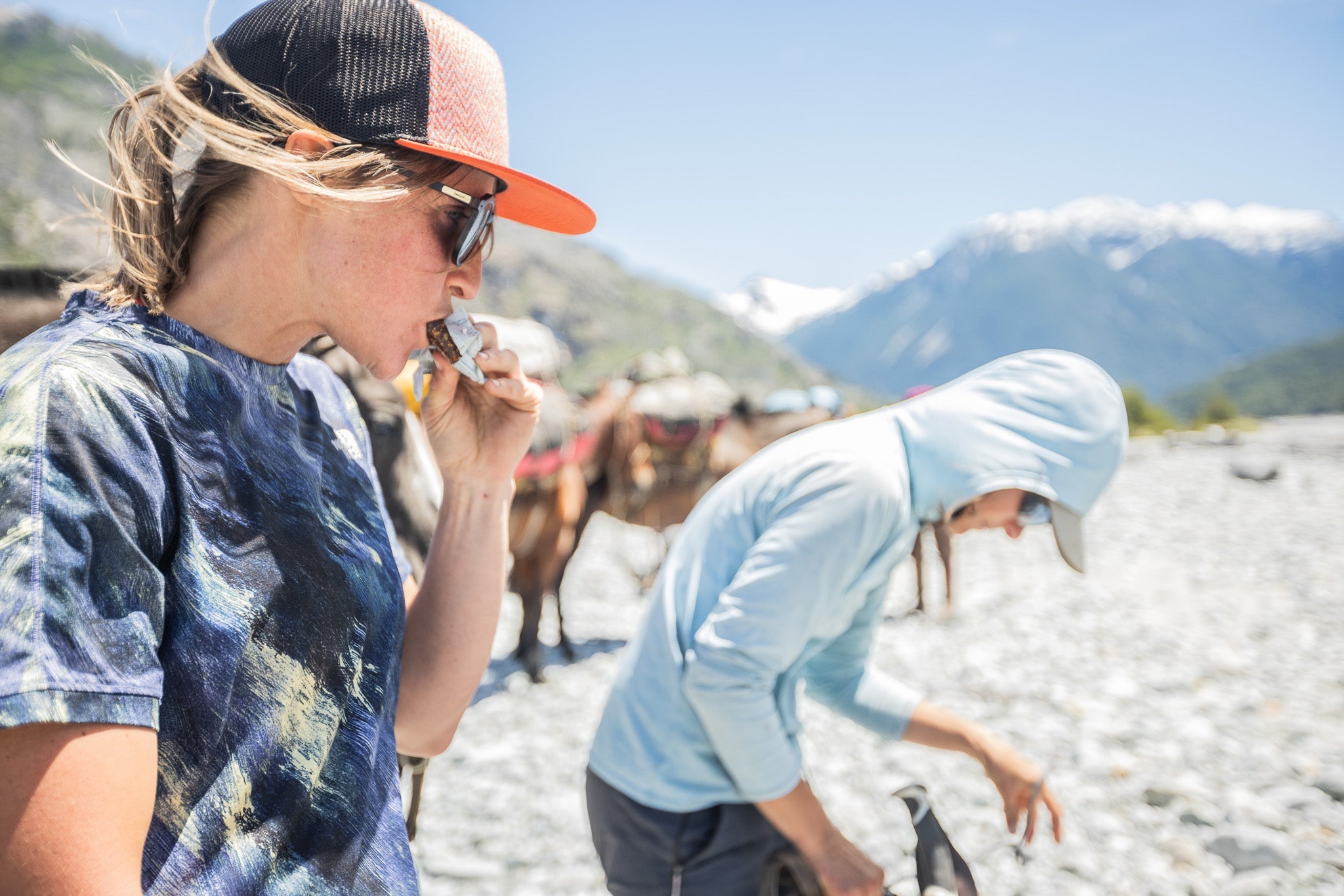
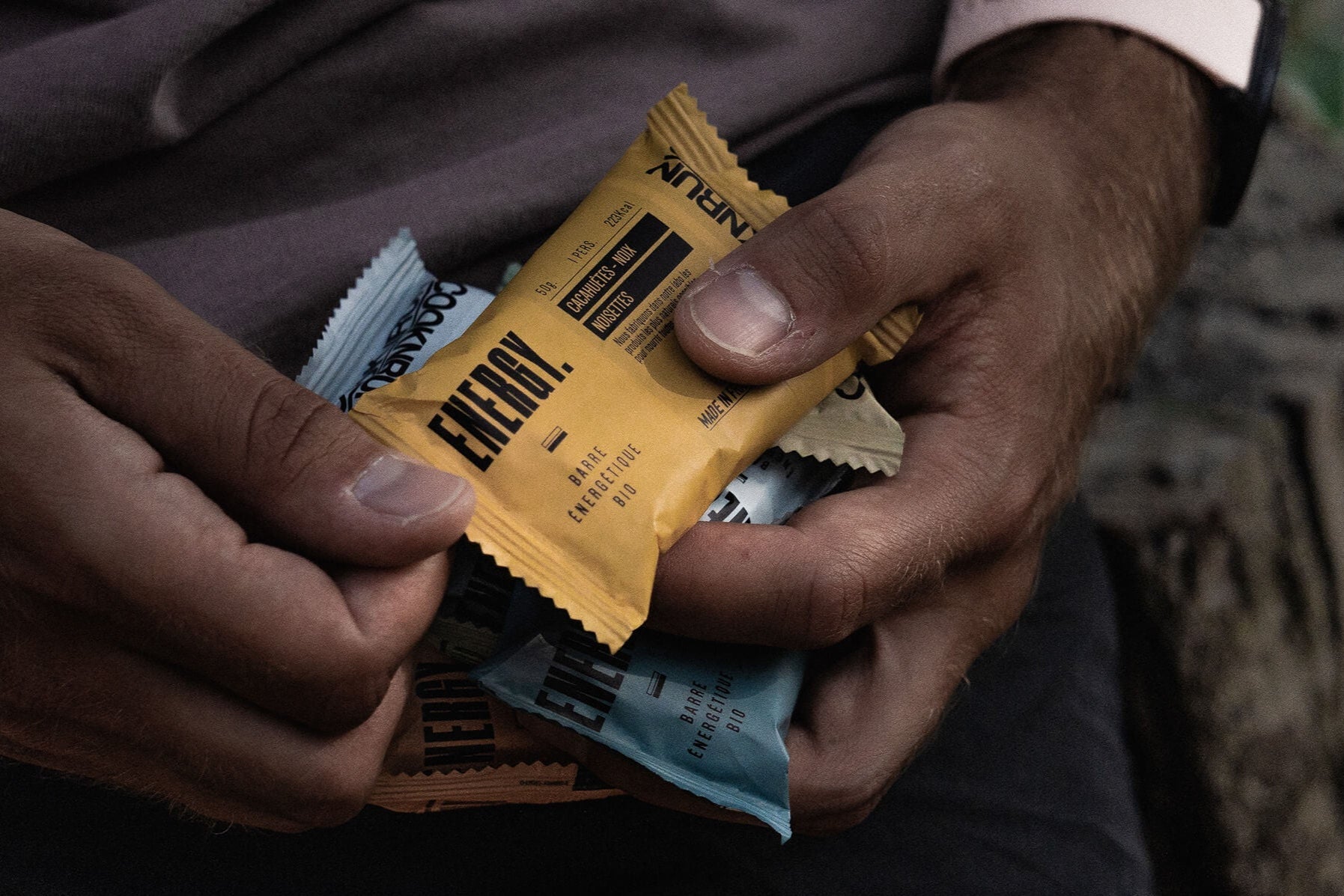
- 🍫 COOKNRUN bars → soft even when cold
- 🧂 Ultra Crackers → perfect for sub-zero temperatures
- 🥭 K2 → ultra reliable in the cold
These formats avoid wasting time, wasting heat… and wasting energy.
3. Believing that “hydration isn’t that important in winter”
Major mistake: reducing hydration because you “don’t sweat.” In ski touring, you lose a lot of water through respiration (dry air, altitude, high heart rate).
Consequences :
- Headaches
- Nausea
- Loss of lucidity (dangerous when descending)
- Decreased muscle power
Effective solutions:
- Drink in small, regular sips.
- Take a warm drink
- Avoid putting iced drinks in your water bottle.
👉 A hot infusion ( COOKNRUN organic infusions ) in a thermos is ideal: hydration + internal warmth + easier digestion.
4. Reasoning “as in trail running”, when the physiology is different
This is the most typical mistake made by runners who take up ski touring. Ski touring is not trail running on snow: it's a mountain sport involving cold weather + altitude + the effort of propulsion.
Major differences:
- ❄️ Higher energy expenditure
- ⛰️ Increased carbohydrate utilization
- 🌬️ Slowed digestion
- 🥶 Hidden hunger
So: copy-pasting your trail running habits = bad idea.
A more suitable approach:
- small, frequent portions
- digestible formats
- Alternating natural sweetness and light saltiness.
A perfect example at the top: hot soup + Ultra Crackers → heat + sodium + stable energy.
5. Eating "a big thing" instead of fueling intelligently
Many people think that you need a real meal to keep going: sandwich, massive bar, chocolate bar… → Bad strategy.
At high altitudes and in cold weather, large volumes of food are needed:
- are difficult to digest,
- create a heaviness,
- slow down the ascent
- decrease muscle oxygenation.
The winning rule:
Refueling ≠ eating a lot. Refueling = eating regularly.
When is a real meal necessary?
Only during a long stop (refuge, summit, bivouac).
And here:
→ Perfect format: warm, digestible, organic.
In summary
Nutrition in ski touring isn't about quantity, but about timing , digestibility , and adapting to the cold . Avoiding these 5 mistakes will radically change the quality of your outing.
With K2, Ultra Crackers, COOKNRUN Bars and Bivouac meals, you maintain stable energy even in the most demanding conditions.
Photo: ©Blandine Reynaud