
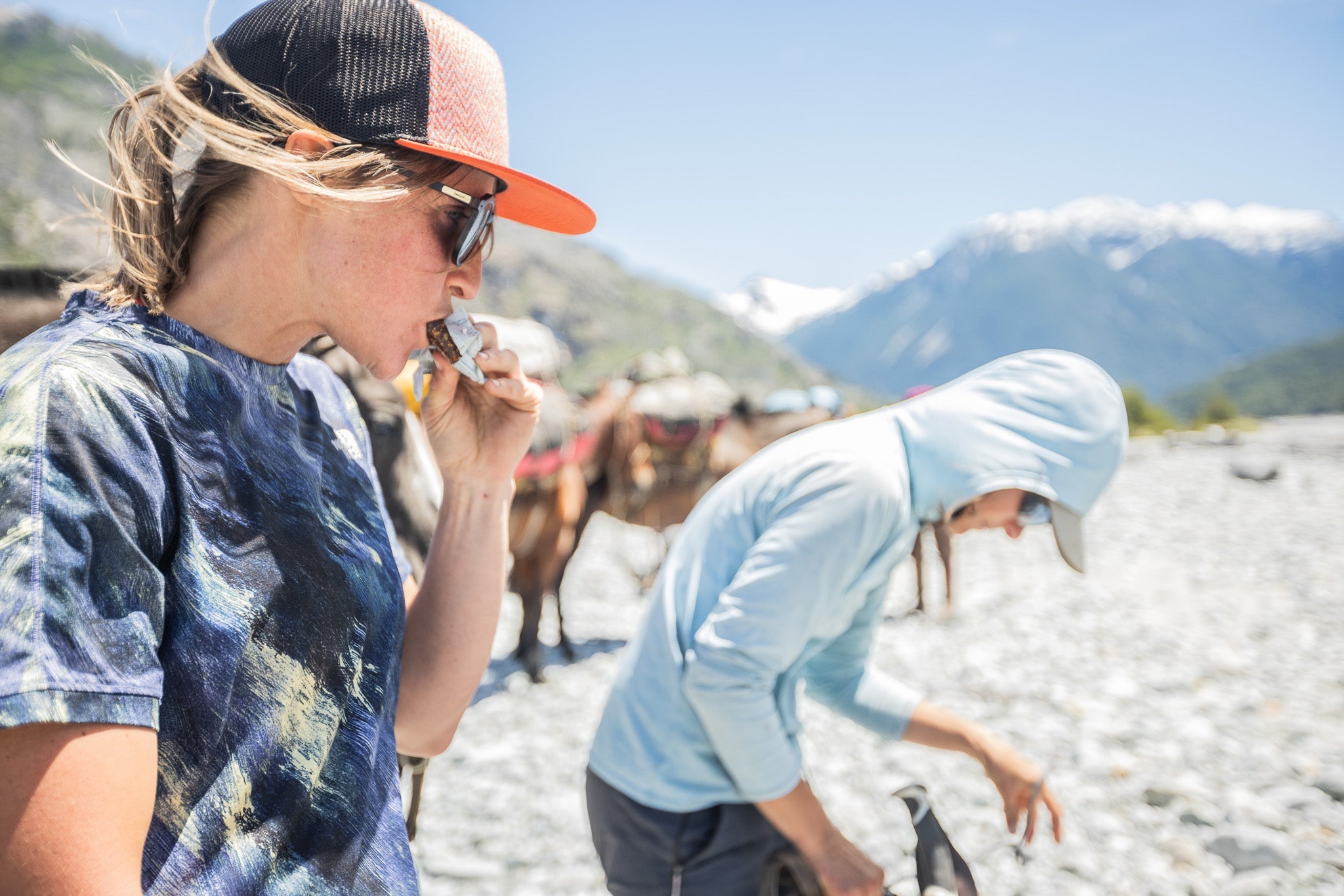




- In gravel biking, nutrition is mainly about maintaining stability: consistent energy, continuous hydration, and controlled digestion.
- The simplest basic rule: solids + liquids, with regular intake before feeling hungry.
- After 3 to 4 hours, alternating sweet and savory often becomes crucial to keep eating without feeling nauseous.
What to eat for gravel biking? The simple guide to riding long without bonking
Gravel rides are often long. Sometimes very long. And unlike a classic road ride, you don't always pass by a bakery, a fountain, or a resupply point at the right time.
The result: your nutrition makes a real difference between finishing strong… or bonking at km 90.
The right approach isn't to overcomplicate things. The right approach is to implement a simple, regular, and easily digestible strategy.
Why nutrition matters so much in gravel biking
Gravel biking combines several constraints:
- often long rides,
- uneven terrain,
- frequent changes in pace,
- and less easy access to food or water.
In practice, this changes a lot of things. You can't just "eat when you think about it." In gravel biking, waiting until you're hungry or feeling a dip in energy is often too late.
👉 The real goal: provide continuous energy.
The basics: eat before you're hungry
The classic mistake in gravel biking is simple: waiting until you're hungry.
Your body works like a fuel tank:
- if you fill it regularly → your energy remains stable,
- if you wait too long → the drop is sudden.
In the field, this means one thing: fractionate your intake.
Instead of taking a large portion every two hours, it's better to take a little, often. This is more effective for blood sugar, more comfortable for digestion, and much easier to maintain mentally over 4, 5, or 6 hours in the saddle.
How much to eat per hour?
Here's a simple basis, useful for most gravel rides:
| Ride duration | Recommended intake |
|---|---|
| < 2h | 30 to 40 g of carbohydrates / hour |
| 2 to 5h | 40 to 60 g / hour |
| 5h+ | 60 to 80 g / hour |
These are not figures to be applied mechanically, but very good benchmarks for building a simple plan.
Specifically:
- 1 bar = approximately 20 to 25 g of carbohydrates
- 1 bottle of energy drink = approximately 20 to 40 g depending on the dosage
👉 The idea isn't to do everything with a single format, but to intelligently combine liquids, solids, and possibly a quicker intake if needed.
What exactly to eat for gravel biking?
The right mix: solid + liquid
In gravel biking, the simplest and most robust strategy often remains:
- bars → for energy and satiety,
- energy drink → for hydration while providing carbohydrates,
- gels or very fast formats → as a supplement, not necessarily as a base,
- savory → to avoid nausea over long durations.
This logic works well because it aligns with the reality of gravel biking: a long, irregular activity, sometimes hot, sometimes very demanding on digestion.
Energy bars: the simplest basic item
Energy bars often remain the most practical format for gravel biking:
- easy to transport,
- easy to portion,
- suitable for regular intake,
- more satiating than a simple liquid intake.
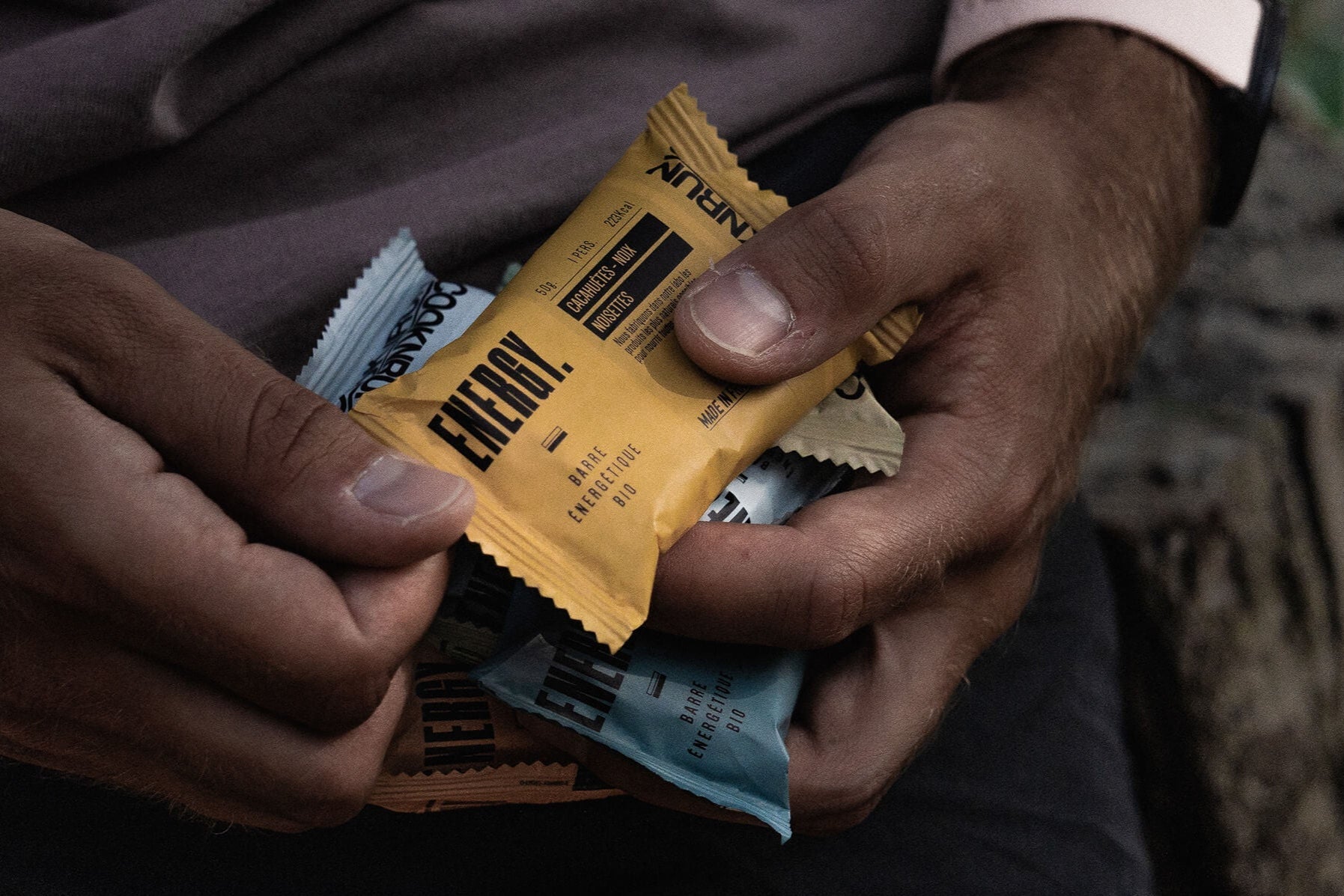
For this type of use, COOKNRUN organic energy bars are designed for field use: easy to carry, suitable for long efforts, and consistent with a strategy of progressive intake.
Energy drink: often underestimated
Many cyclists still think of drinks only as a means of hydration. In reality, on long rides, it plays a dual role:
- it hydrates,
- it nourishes.
This is particularly true in gravel biking, where drinking regularly is often simpler than eating regularly, especially when the terrain is rough, the heat rises, or digestive fatigue sets in.
A COOKNRUN energy drink precisely allows for continuous carbohydrate and electrolyte intake, without relying solely on solids.
Gels: useful, but not necessarily central
Gels or very fast formats can be useful, but they shouldn't necessarily become the basis of your refueling in gravel biking.
They are mainly useful:
- before a climb,
- during a more intense phase,
- at the end of the ride,
- or as a backup plan in case of trouble.
On the other hand, if you want to remain comfortable for several hours, an all-gel or all-fast-sugar approach often ends up causing saturation.
Savory: often the key after 3 to 4 hours
This is one of the most important points for long rides: after several hours, sweet foods alone often become nauseating.
This is where savory items change everything:
- they revive the desire to eat,
- they break the taste monotony,
- they provide sodium,
- and they often improve digestive comfort.
In this logic, COOKNRUN Ultra Crackers have real field utility: a savory, dry, simple, practical snack that serves as a great alternative to the "chips at the aid station" reflex.
Examples of gravel nutrition plans
4-hour ride
- 2 bottles of energy drink
- 3 to 4 bars
- 1 quick energy boost as backup if needed
This type of plan works well for a "sporty long ride" format: simple enough to follow easily, comprehensive enough to avoid an energy crash.
6-hour ride and longer
- 3 bottles
- 5 to 6 bars
- 1 to 2 quick energy boosts for safety
- 1 savory snack
Beyond this volume, nutrition becomes a matter of performance as well as comfort. This is often where alternating liquid/solid/savory becomes indispensable.
2-day bikepacking trip
In bikepacking, the logic changes a bit more. You need:
- a regular base of bars + drinks,
- real meals during stops,
- and savory snacks for the duration.
👉 Here, nutrition is no longer just about "getting through the ride." It also serves to maintain morale, digestion, and recovery over several days.
On very long rides, and even more so in bikepacking or multi-day gravel trips, dehydrated / freeze-dried meals also become very relevant.
They don't replace regular intake while you're riding, but they clearly improve the quality of recovery during downtime: a real hot, more complete, more comforting meal, and often much more effective than a string of snacks.
For this type of format, savory freeze-dried meals are particularly suitable for long adventures where nutrition also becomes a matter of comfort, recovery, and morale.
Common mistakes in gravel biking
1. Relying solely on sweet foods
An all-sweet approach rarely works for very long. After several hours, many riders or cyclists become saturated, eat less, and then fall behind.
2. Drinking too little
In gravel biking, performance decline due to poor hydration happens quickly. And since rides are sometimes more isolated, catching up becomes complicated.
3. Testing on D-Day
Classic, and always a bad idea. What works well in theory doesn't necessarily work well after 4 hours of vibrations, heat, and effort.
4. Eating too late
When the hunger pangs hit, it's already difficult to fully recover. In gravel biking, regularity almost always wins against late compensation.
Gravel vs. road: what really changes
Gravel isn't just "cycling on trails." Nutritionally, there are several differences:
- the effort is often more irregular,
- rides are often longer,
- resupply points are less accessible,
- digestion can be more sensitive due to vibrations and duration.
👉 So, the most effective logic is often:
- more progressive,
- more natural,
- more digestible,
- and more thought out in advance.
Personalizing without overcomplicating: the benefit of a real plan
The real issue isn't just "what to eat." It's primarily:
- how much to carry,
- when to consume it,
- and how to adapt it based on duration, weather, terrain, and your profile.
This is exactly where a tool like SHERPA becomes useful: a 100% personalized refueling planner to avoid guesswork and better structure your nutrition before, during, and after effort.
The most important things to remember
In gravel biking, you don't need to make nutrition complicated.
You mainly need three things:
- eat regularly,
- vary sweet and savory,
- drink continuously.
And most importantly: find what your body truly tolerates over time.
Good nutrition alone won't make you win. But bad nutrition can clearly ruin a great ride.
FAQ – What to eat for gravel biking?
How many carbohydrates should you aim for per hour in gravel biking?
For most rides, a useful baseline is 30 to 40 g/h for less than 2 hours, 40 to 60 g/h between 2 and 5 hours, and 60 to 80 g/h beyond. These benchmarks should then be adjusted according to your digestive tolerance and intensity.
Should I prioritize bars or energy drinks?
Both are complementary. Bars provide energy and satiety, while energy drinks hydrate while adding carbohydrates. In gravel biking, the best balance is often a solid + liquid mix.
Why does savory food become important on long rides?
After several hours, sweet foods alone often become nauseating. Savory foods revive the desire to eat, improve digestive comfort, and help vary intake, particularly through sodium.
What should I bring on a 4-hour gravel ride?
A simple baseline could be: 2 bottles of energy drink, 3 to 4 bars, and an emergency quick boost. Then, it depends on the terrain, weather, and your profile.
How to avoid bonking in gravel biking?
By starting early. The most effective way is to eat before you're hungry, with small, regular intakes. If you wait until you hit a wall, it's often too late to easily return to a stable level.
Photo ©SIMON ROSMOLEN

