




Climbing Ama Dablam is a dream for many mountaineers.
Doing it alone, in the heart of the Himalayas, in some of the most difficult conditions of recent years, is a unique adventure.
For Mélanie Grünwald, this climb was much more than a summit: it was a reconquest, an intimate dialogue with the mountain and with herself.
A long-held dream
Ama Dablam had been silently living in a corner of my mind for years. It's a mountain that demands both skill and soul, demanding enough to push you to your limits, elegant enough to draw you in. For me, it's undoubtedly one of the most beautiful mountains I've ever seen.
It was also one of the last climbs on a list of dreams I had written before an injury kept me away for five years. Going back to it was like finishing a sentence I had started a long time ago.
Going solo wasn't about proving anything. It was about answering a profoundly honest question:
"Who am I when I have no one to lean on?"
Climbing alone is the most intimate conversation you can have with the mountain, and with yourself.
Every step belongs to you. Every doubt too. Every victory as well.

A preparation without artifice
The preparation was anything but glamorous. It was a matter of consistency.
A lot of endurance in the mountains, thousands of meters of elevation gain each week, and learning to move efficiently even when tired.
Mentally, I was working on emotional regulation:
-
to remain present despite the discomfort,
-
to make decisions with a calm nervous system
-
to remain curious rather than frightened.
I don't believe in the cliché of "conquering" the mountain.
I believe in achieving this with humility, serenity, and the mental flexibility needed to adapt, because conditions change faster than the ego.
The ups and downs
The highlight was reaching the summit ridge just as the first light touched my face. The wind was picking up, the Himalayas were opening up in every direction. I felt microscopic, and completely alive.
It's fascinating how the mountains can make you feel small, but never insignificant.
At altitude, everything becomes clear: the world is reduced to one step, one movement, one breath at a time.
The hardest part wasn't the climb, it was getting sick. Losing your strength at altitude is terrifying, because every meter gained becomes heavier. The loneliness becomes more acute when your body stops cooperating.
At night, the mountain is noisy, and yet, the silence is even louder. Doubt creeps in. You learn to be your own reassurance, your own warmth.
Eating at high altitude
Altitude changes everything: appetite decreases, digestion slows down, and energy levels fluctuate wildly.
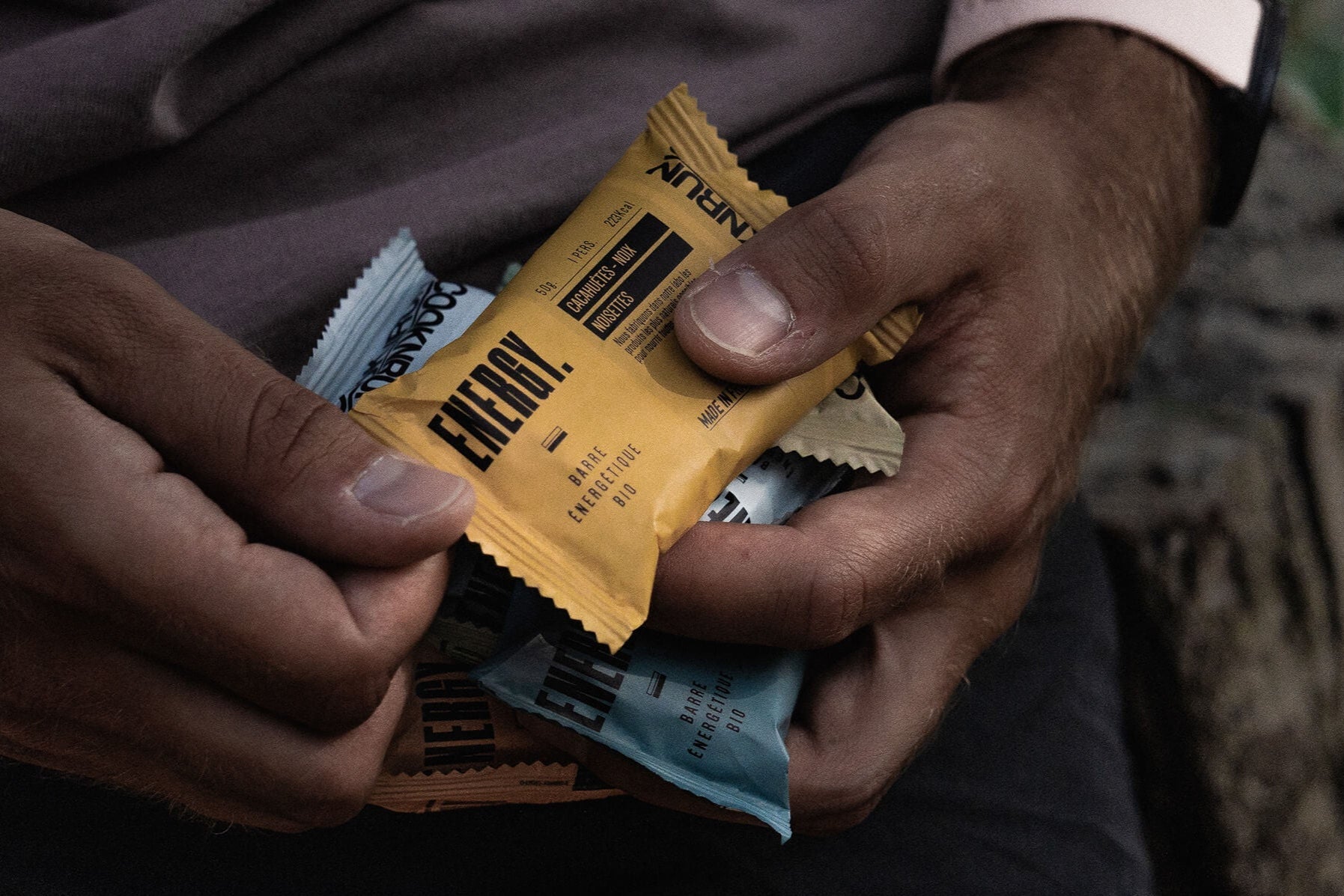
I focused on simple carbohydrates, warm and salty foods for electrolytes, and clean products like COOKNRUN , which I could digest even at 6,000m.
BIVOUAC lentil and puree soups helped me regain my strength, even at base camp, when nothing else would go down. It was crucial after food poisoning, a real turning point in my recovery.
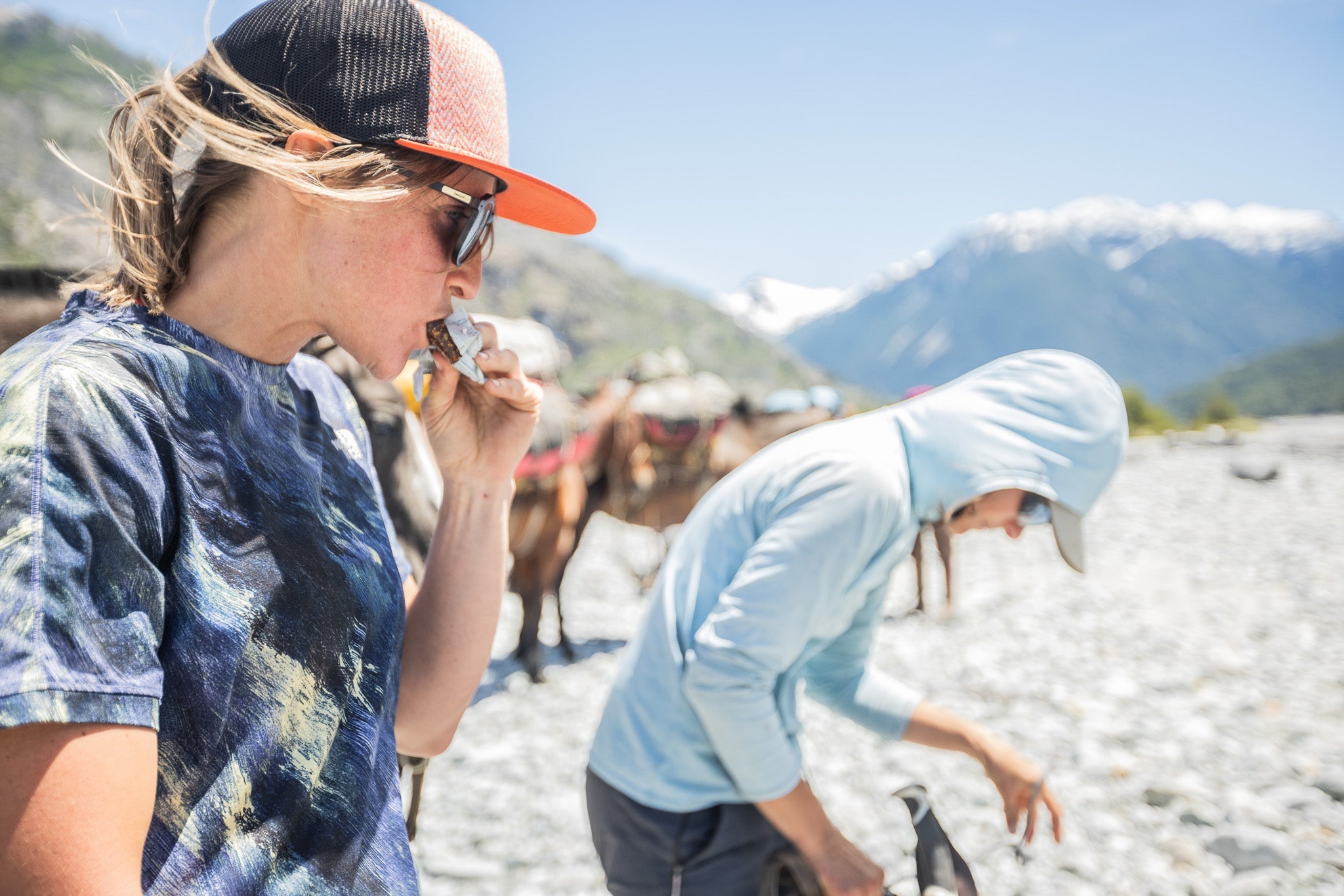
During the final climb, the energy bars were a lifesaver: easy to eat when appetite disappears, but providing reliable energy.
And afterwards, recovery calories count. I relied on COOKNRUN protein bars to help with muscle repair and rebuilding.
Fuel is not just calories, it's clarity, warmth, comfort, and decision-making power.


Learning from solitude
Climbing alone exposes every nook and cranny you usually hide.
I learned that:
-
I can remain calm when the variables multiply.
-
Fear is not the enemy, it is information.
-
The mind is often louder than the mountain.
And I also realized how much I value connection, something you only truly grasp when you choose to deprive yourself of it.
The mountains teach, but only if you arrive quiet enough to listen.
Acceptance rather than ego.
The conditions were among the worst we'd seen on Ama Dablam in decades: deep snow, wintry cold, and severe food poisoning on top of it. More than once, I doubted I'd ever reach the summit.
Leaving camp 1 at 3 a.m. on the morning of the summit was terrifying.
The immensity of the task weighed heavily on me, and being alone on the route that day made the mountain seem even larger. Until the very last hundred meters, I wasn't sure I would make it.
My legs felt heavy, the accumulated fatigue from the high-altitude camps weighed heavily on me, and my heart rate wouldn't stabilize. It was at that moment that I stopped chasing an ideal pace and started climbing at the pace my body could actually maintain. Acceptance rather than ego.
Being alone doesn't mean being reckless. It means adapting when the mountain demands it.

A lesson to be learned
We often celebrate the summits, but the real magic lives between the first step and the last: in the silent decisions at altitude, in the discipline to continue when no one is watching.
A summit does not define your character; it is the way you progress along the way that does.
And then the real work begins: bringing these lessons back into everyday life, where they matter most.
If there is one message to remember, it is this: Let the mountain change your way of life, not just your way of climbing.
A summit like no other
Ama Dablam had haunted me for years, a name written on a list long before surgeries, setbacks, and convalescence reshaped my trajectory. Going there wasn't just an ascent; it was closing a circle I'd left open.
This came at a time when I was finally strong enough, physically and emotionally, to meet her on her own terms. Accomplishing it marked the end of an old chapter, while subtly pointing towards the beginning of a new one.

Returning to daily life
The descent, or rather the return, is always more difficult than the ascent, both physically and emotionally. Your mind remains calibrated for precision and presence, and ordinary life initially seems strange and distant.
I try to move slowly, sleep well, and let the lessons sink in instead of rushing towards the next goal. This pause is part of the climb.
The mountains are not an escape for me. They don't numb reality, they sharpen it. They strip away the superfluous and send you back to the world with a clearer vision.
For me, a meaningful life thrives on duality: adventure and routine, solitude and connection, depth and lightness. These are not opposing worlds to choose from, but two halves of the same human experience.
And that is where true fulfillment lies: Let the clarity of the heights transform your way of living in the valley, not just your way of climbing.


Your journey is inspiring and heart breaking at the same time.