




Two COOKNRUN athletes, Fay Manners and Mélanie Grünwald, achieved the first female ascent of a new, committing mixed route on Tête aux Chamois. Conceived and led entirely by Fay Manners, this new route, graded M7+ A0, is the result of three long winter days combining mixed climbing, dry tooling, steep skiing… and spaghetti cooked each evening in a four-star hotel.
Account by Mélanie Grünwald.
Elles Aussi: The first female ascent of a new mixed route & pasta cooked in a 4-star hotel
Some projects start with a meticulously crafted plan.
This one started with a phone call and something I stated very clearly: “I have limited experience on serious mixed terrain.
And zero experience in dry tooling.”
I’m still not entirely sure Fay Manners heard me correctly.
Three days later, we were roped up beneath the Tête aux Chamois, gazing at a steep, icy face just above Glacier 3000, about to attempt the first ascent of a new mixed line that would later become Elles Aussi (M7+ A0). A female first ascent. No guarantees. No beta. Just a line we hoped we could climb.

From topo to new lines
The idea for the route came from Fay, who has spent several winters exploring mixed and dry tooling possibilities in the region. Years earlier, she had discovered the area through Simon Châtelan's Dry Tooling and Mixed topo, and began deliberately searching for unbolted natural lines. Those that demand commitment, judgment, and a tolerance for uncertainty.
After climbing several of Châtelan's routes, Fay asked him if he would be comfortable with a new line on Tête aux Chamois. His response was encouraging: few climbers are motivated to develop winter routes here, and he welcomed the initiative.
The face itself is located just below the Col du Pillon chairlift and is accessed via the Black Tunnel, a passage much more frequently used by committed skiers heading towards the Black Wall descent: 3 km, 1000 m of elevation gain and up to 45°. This project therefore not only required a climbing partner; it required someone comfortable skiing steep terrain with a heavy pack, after long, cold days on the face.
She ended up calling me. No dry tooling experience to boast about, but a real desire to commit to long, complex, and full alpine days.

Hotel luxury… alpine style
We spent three days on that wall, shivering, either from fear or cold, sometimes both. It was tough. Freezing. Intimidating.
But fortunately, Glacier 3000 offered us the comfort of a 4-star hotel (the Glacier Hotel in the center of Les Diablerets) every night to warm up and recharge. Spa, sauna, and real beds were infinitely better than the "shivering bivy" we would have faced below the wall.
Every evening, we found ourselves in a four-star hotel surrounded by polished wood and soft light, using the ultra-chic coffee machine to rehydrate our COOKNRUN vegetarian spaghetti bolognese. Luxury, but alpine style.
It was ridiculous. And perfect.
No matter how hard the day on the wall, our evenings always ended with laughter over our pasta before collapsing into our beds.
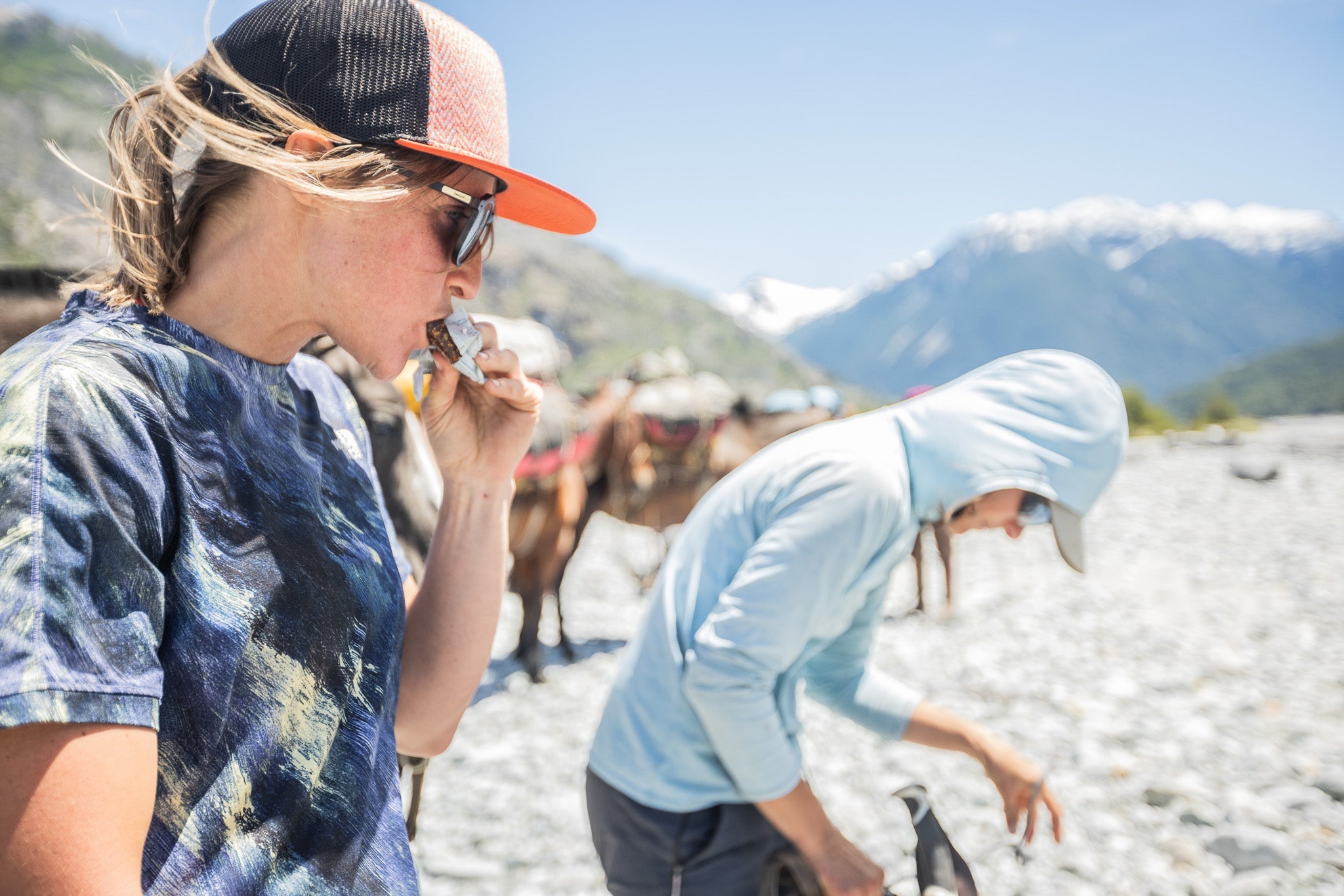
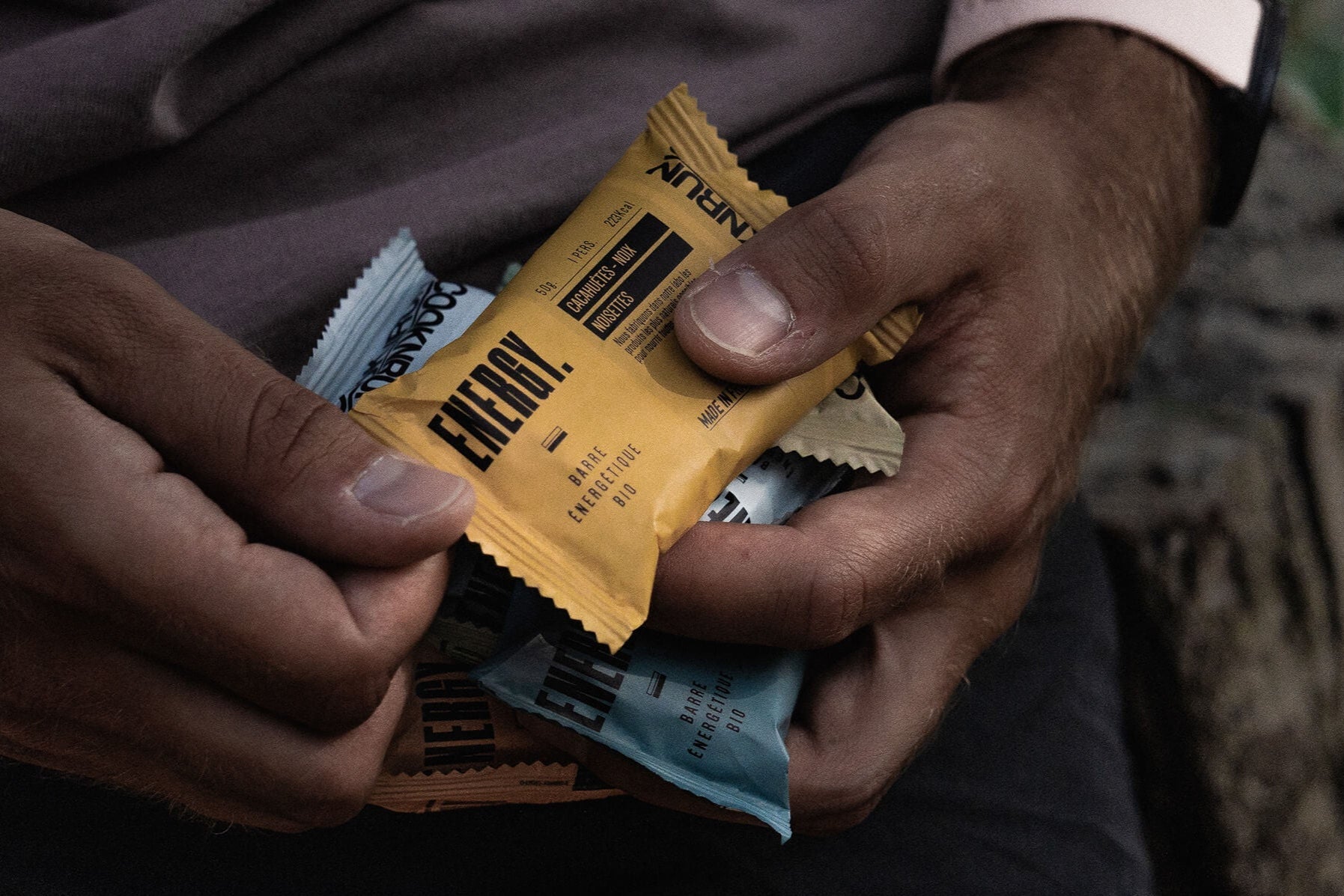
And on the wall, COOKNRUN energy bars kept us fueled on belays so cold we could barely feel our hands. These bars became our little luxury: quick calories, no fuss, something we could eat even when the cold had stolen our appetite.
A character-building experience (to say the least)
Tackling an M7+ with overhanging dry roofs as a very first dry tooling experience proved to be… formative. Even following.
More than once, I found myself wistfully thinking of my climbing shoes waiting for me in the valley, dreaming of friction rather than swinging single points on micro-edges. I missed the simplicity of a good hand jam, just as I missed the security of a crack glove. Instead, I was learning, in real time, to trust my ice axes on pure rock.
Dry tooling, it turns out, is truly a skill that develops over time.
The first two days were tough. Cold. Intimidating. With heavy snow on the approach and unstable rocks demanding constant vigilance, progress was slow and mentally taxing. More than once, we weren’t sure we’d make it to the end.
Midway through the second day, Fay took a proper fall. By then, I had already spent nearly three hours in the most uncomfortable hanging belay of my life, and my back decided it had reached its limit. I was convinced that one more sneeze could give me a slipped disc. How I managed to follow her through the crux after that remains a bit of a mystery, but somehow, we did it.
And somehow, we reached the top.


One pitch after another
The first pitch followed a superb, dry dihedral, delicate and precise with ice axes and crampons. Higher up, two massive roofs guarded the line. One was bypassed by a traverse; the other required a direct and steep climb.
Fay led the route, climbing free as much as possible, and eventually resorted to a short section of aid to safely place protection and anchors. The upper pitches followed high-quality compact rock, snow-filled cracks, and sections of frozen turf. On the last pitch, we encountered and reused existing bolts from the route Ma Révérence (2003) with the agreement of the first ascender Lador Bertrand, thus avoiding additional drilling.
Ski descent
Each day ended not with a leisurely walk down, but with steep skiing all the way to the bottom. Heavy packs. Tired legs. Maximum concentration required.
This wasn't just a climbing route; it was a fully multidisciplinary winter project, combining mixed climbing, dry tooling, logistics, and serious skiing.
And yet, despite the suffering, uncertainty, and physical effort, we never ended a day without a smile. We laughed. Shared bars on tiny ledges. Cooked our spaghetti meals in hotel rooms with water from small espresso cups. And we stubbornly believed in the vision of Elles Aussi.
This route is for the girls, in a corner of the alpine world still very much dominated by men. And honestly? What's a little suffering compared to that.

Why it mattered
Even as a complete novice in dry tooling, I was motivated to support this project. For me, this ascent represented as much a support for this vision as an opportunity to learn quickly, expand my technical skills, and voluntarily engage in unknown terrain.
Over three long winter days, we completed the route just before the snow fell, a timing that proved crucial. And while the route hasn't been fully free-climbed yet, we hope that future teams, especially women, will repeat it and perhaps suggest an updated grading.

