






Quick summary:
- 🥾 A multi-day trek requires a suitable nutritional strategy: energy, practicality, recovery.
- ⚡ Objective: to cover >3000 kcal/day, with a good weight/energy ratio and intake of carbohydrates + lipids.
- 🍫 Dried fruits, bars, aged cheeses and dehydrated foods are the light and energy-boosting allies of the trekker.
Why is nutrition crucial on a trek?
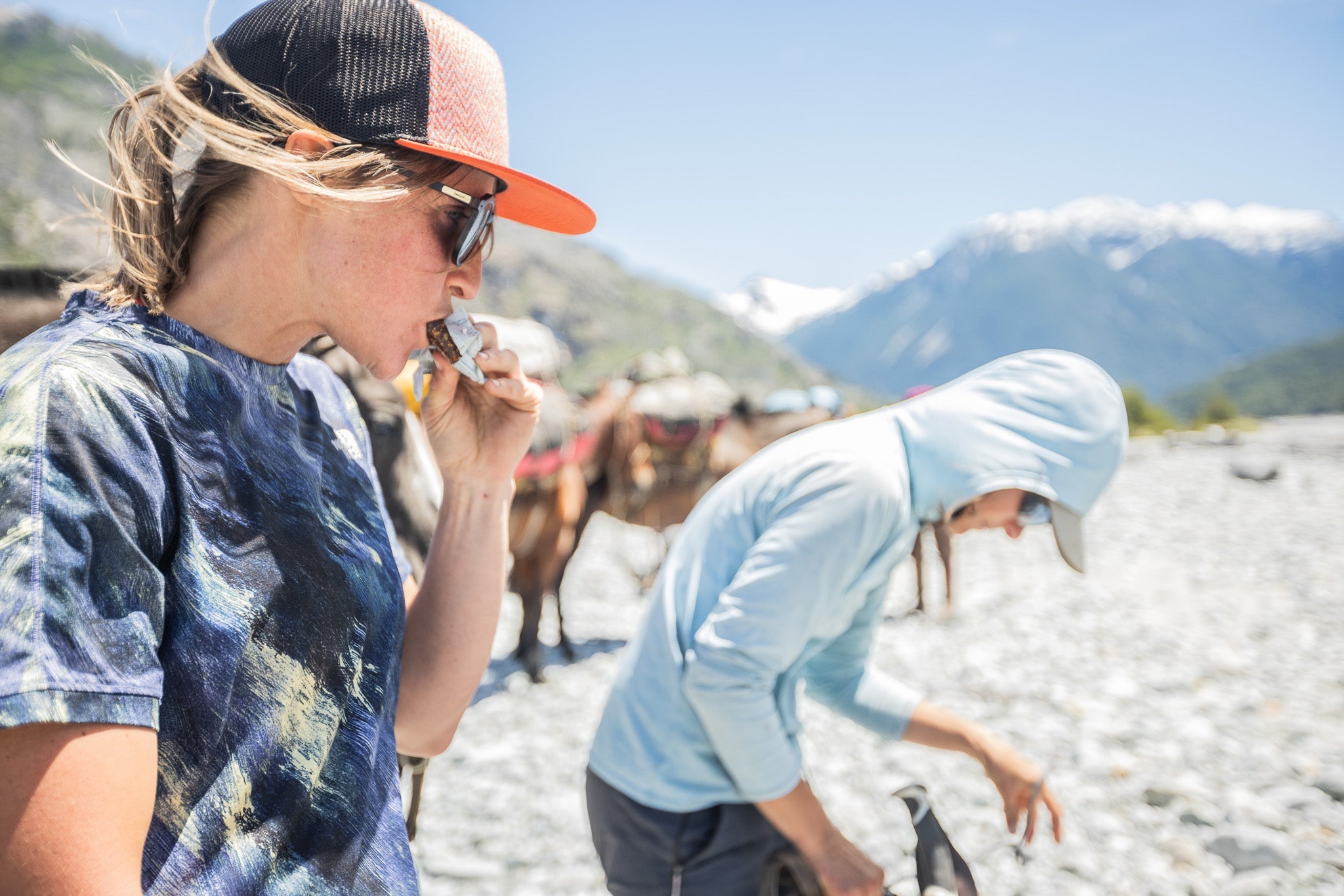
A trek lasting several days , or even several weeks, is nothing like a day hike. Here, nutrition becomes a delicate balance between energy intake, practicality, and recovery .
There are many constraints:
- Limited load capacity: every gram must be chosen.
- Little or no access to fresh produce: perishable foods are out of the question.
- Appetite is sometimes reduced due to altitude or fatigue.
👉 In short: every bite counts. Your bag should contain compact, calorie-dense, and easily digestible foods.
The energy needs of the trekker
During a mountain trek, energy needs explode: often more than 3000 kcal/day , sometimes up to 5000 kcal if the stages are long and demanding.
The nutritional objectives are:
- Meeting high needs → avoid weight loss and chronic fatigue.
- Optimize the weight/energy ratio → foods that are calorie-dense but light to carry.
- Favor carbohydrates + lipids → main fuels for prolonged endurance.
Comparative table: energy density
| Food | Calories / 100g | Main advantage |
|---|---|---|
| Almonds, walnuts | 600 kcal | Rich in lipids, easy to transport |
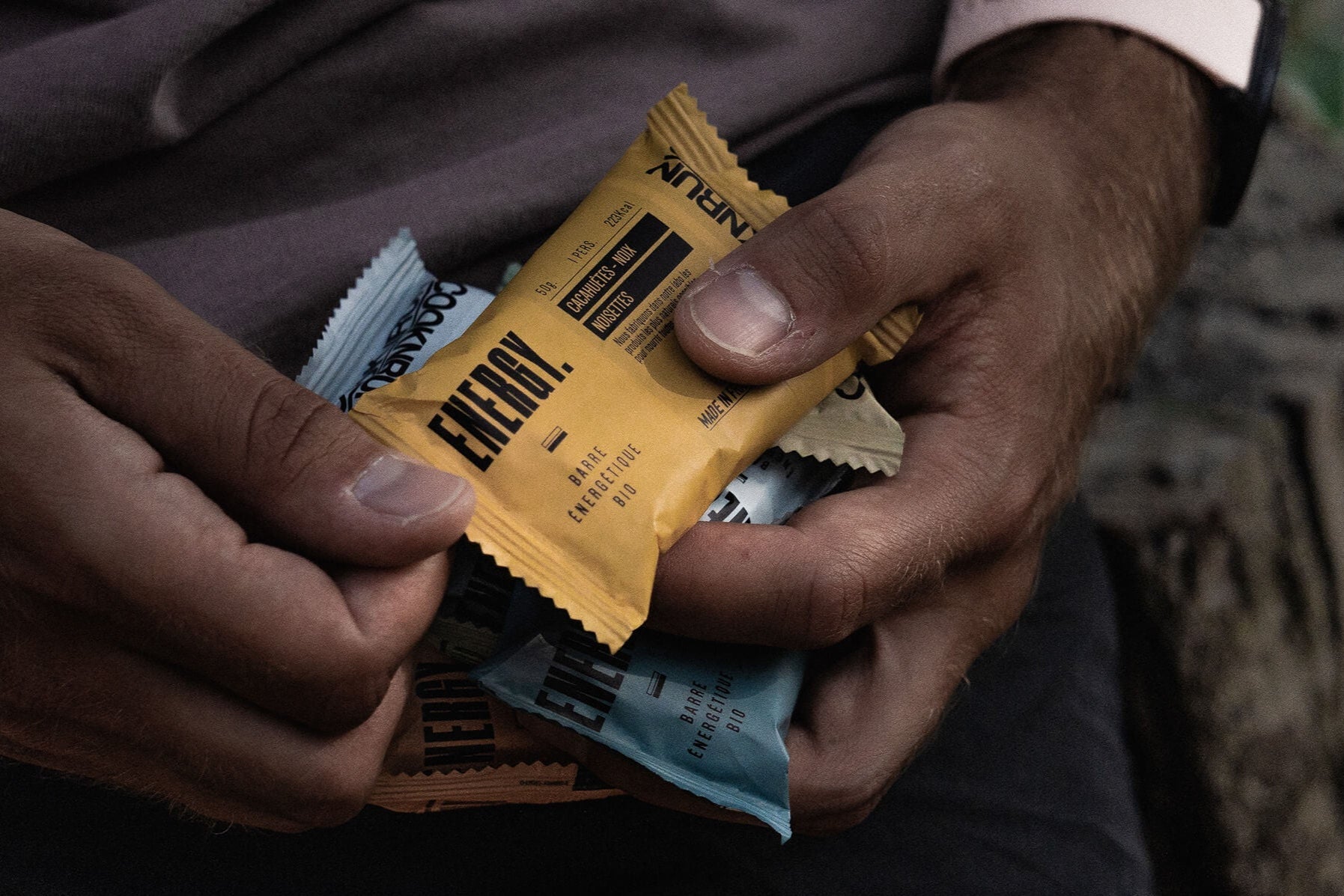
| Compact energy bars | 350–450 kcal | Convenient, ready-to-eat portions |
| Dried fruit (dates, raisins) | 300 kcal | Fast-acting carbohydrates + minerals |
| Instant pasta | 350 kcal | Quick cooking, hot meal |
| Mature cheese (parmesan, comté) | 400 kcal | Provides fats and proteins, good preservation |
What foods should you choose while trekking?
The rule: prioritize dense, non-perishable, and tested foods. Here is an effective selection:
- 🍇 Dried fruits & oilseeds → ideal combo of carbohydrates + lipids.
- 🍫 Compact bars → easy access while walking.
- 🥣 Savory purees & compotes → variety of textures and digestive comfort.
- 🍝 Instant pasta → quick hot meals, easy to enrich.
- 🥖 Dry bread & crackers → carbohydrate intake + crunchy texture.
- 🧀 Mature cheeses (parmesan, comté, cheddar) → fat + protein, good preservation.
- 🥩 Dehydrated proteins (dried meat, protein bars ) → useful for muscle recovery.
Example of a daily ration (≈3500 kcal)
| Moment | Food | Energy intake |
|---|---|---|
| Breakfast | Oat flakes + milk powder + dried fruit | 600 kcal |
| Morning snack | 2 energy bars + a handful of almonds | 700 kcal |
| Lunch | Dry bread + aged cheese + dry sausage | 800 kcal |
| Afternoon snack | Compote + crackers + cashew nuts | 600 kcal |
| Dinner | Instant pasta + olive oil + savory mashed potatoes | 800 kcal |
What science says
A study by Hoyt (2001) showed that long-distance hikers never replenish 100% of their energy needs . In practice, this means that moderate weight loss is almost inevitable.
👉 Solution: Optimize each meal with energy-dense foods. Every gram should provide you with a maximum of calories and useful nutrients.
Practical field advice
- Lighten your bag : opt for dehydrated and concentrated foods.
- Provide variety : avoid disgust linked to food monotony.
- Add salt to meals : to compensate for mineral losses through sweat.
- Managing cooking : limit gas by choosing foods that cook quickly.
- Test beforehand : as in competition, nothing new in trekking.
FAQ – Nutrition on treks
How many calories should I plan to consume per day while trekking?
On average, between 3000 and 5000 kcal/day depending on the intensity, altitude, and weight of the pack. Needs increase with cold weather and the weight of the pack.
What are the best foods for a long trek?
Dried fruits, nuts, bars, instant pasta and aged cheeses. They combine energy density, convenience and taste.
Can we take away fresh produce?
Yes, but only for the first few days (fresh bread, fruit). After that, you should switch to dry and non-perishable foods.
Conclusion
When trekking, nutrition is your primary fuel. Your pack should be designed as a strategic reserve: compact, dense, and digestible.
👉 Eating well while trekking = covering your energy needs, keeping your morale up and promoting recovery .

